 KUKŪ
Listening
Audio stories for kids: how to listen without a screen
Audio stories for kids can play even when the screen is put away. Choose one story together, press play and place the device out of your child’s line of sight. Your child can draw, build, listen snuggled up next to you, or simply be calm. At bedtime it’s worth agreeing in advance when the recording will end.

Choose a story before you press play
Offer two clear options and say briefly what they are about: “In one story a puppy finds a shell, in the other a fox looks for the way across a colourful bridge.” Children find it easier to choose when they can decide by character or topic. If you look at the story cover together, it can take just a few moments.
If you don’t know the story, you can listen to the beginning first. Notice whether the voice is clear, whether any unexpectedly loud effects pop up and whether the plot will appeal to your child. If they’re tired right now, a story they’ve already heard is a good fit. Once you’ve chosen, one press of the play button is enough, and the device can go somewhere only a grown-up can reach.
Test that the sound works with the device put down
Different browsers and devices behave differently when you lock the screen. Try the chosen recording briefly before you start the evening routine. If the sound stops when you lock the screen, you can leave the recording open and put the phone away from your child so they can’t see the screen. Set the volume so it’s easy to hear from the listening spot.
If you’re using a separate speaker, connect it first and check that the recording plays normally. It’s easier to place the device on a stable surface and keep any cables out of your child’s reach. If there’s no connection or the recording won’t start, keep a simple back-up: a familiar story from a book, or one of your own.
Let your child choose what to do while listening
Some children snuggle between cushions, others prefer to listen while drawing or leafing through a familiar book. A child who is moving around may still be taking the story in. Listen for whether they react to events, repeat a character’s word or notice when a voice changes. If their attention has wandered elsewhere, switching the recording off is perfectly normal too.
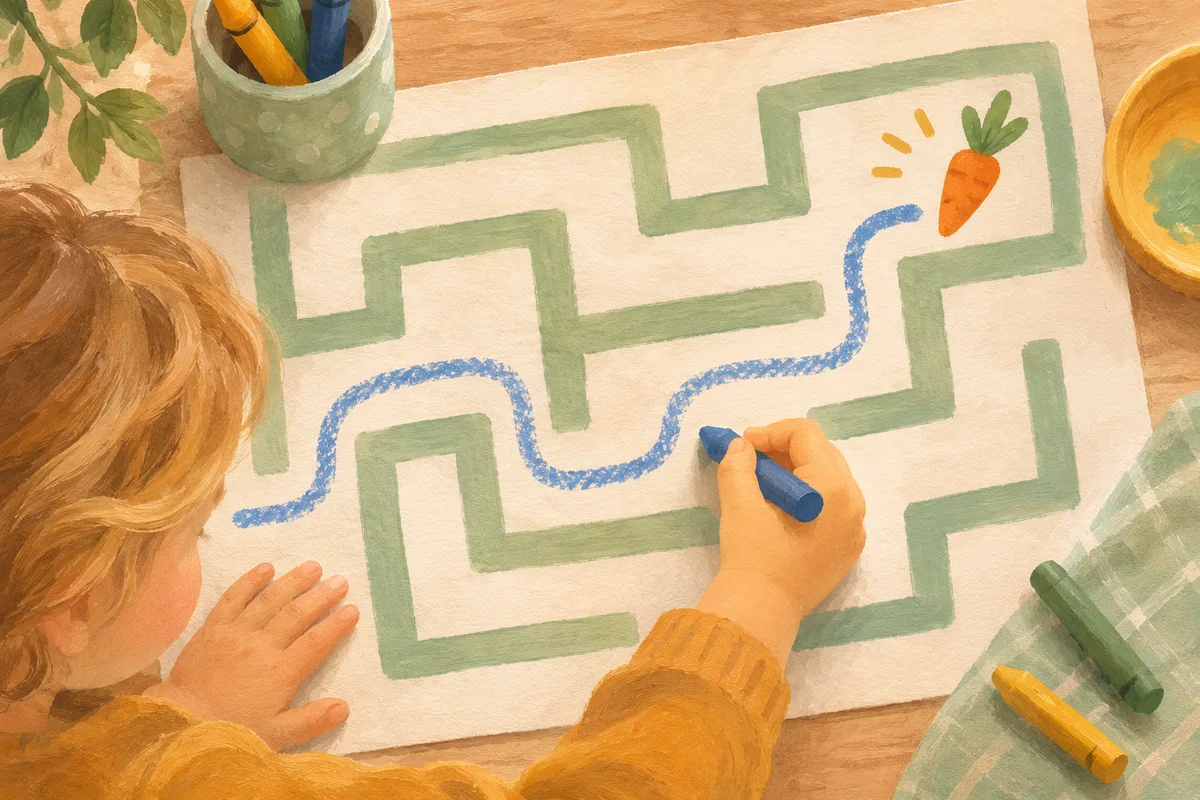
A drawing suggestion can be simple: “Did you hear what kind of little house the bear found? You can draw it if you like.” The drawing doesn’t have to match the original illustration. If your child imagines a purple tree, leave room for their idea. Another idea is to set out one toy to stand in for the main character. Your child can move it when that character starts to travel in the story.
After listening, one question is enough
At the end you can ask, “Which part did you like best?” If your child isn’t sure, share your own: “I liked it when the friends found the way home.” Sometimes they’ll want to tell you everything at once. Sometimes a cuddle is enough before you move on to the next step of your family’s evening. During play in the daytime you can ask how the story would continue if the character met someone new.
It’s handy to choose a story to suit the situation. At bedtime you often want a calmer tale, while in the afternoon a livelier adventure works well. If listening starts to get in the way of conversation or play, stop the recording. You can come back to it when the family wants to listen again.
Where can I find a story for a first try?
Try “Amsius and the quiet shell”. On the website you can read the text or play the original recording. Once you’ve looked at the description, decide whether the story suits today. If your child wants a different character, you’ll find another choice on the stories page.
If your first try didn’t work, think about what you could change. Maybe the recording was too long, maybe the grown-up was sitting too far away, or maybe your child would rather have had a family member read to them. Change just one thing next time. The right format for a story can differ even for the same family on different days.
Create a simple listening spot
If you’d like to listen more often, look at where your family naturally sits together. It might be the sofa, a corner of the rug or a windowsill with cushions. Decide together where the device will go and how your child can ask for a pause. An agreement like that helps when the buttons aren’t visible. You can say: “If you want to tell me something, touch my shoulder and we’ll stop and talk.”
Before you play a story, notice what’s going on in the background. If the television, music or noisy household appliances are on, the voice can be harder to hear. Where possible, it’s easier to choose a quieter spot. If your family listens in a shared room, you can agree in advance that a brother or sister can sit down too and choose the story next time.
If your child wants to listen alone, you can stay nearby while you set up the recording, then come back a few minutes later to check that everything is fine. What matters is that they know where to find you if they feel uneasy or the story ends. Sometimes the cosy preparation, choosing a spot together and pulling up a cushion, is remembered more than any particular recording. You can use the same ritual when you decide to read aloud from a book.
Frequently asked questions
How long should we listen for at a time?
Choose a story to suit your child’s attention and your day. You can agree to listen to just one story, or part of one. If you’re listening at bedtime, agree when you’ll turn the sound off before you press play.
Is it fine to just read aloud?
Yes. When you read yourself, you can easily match the pace to your child’s reactions. A recording is handy when you want to listen together, or when a family member can’t read that evening. You can alternate between the two and sometimes let your child choose.
What if my child asks to look at the screen?
Show one cover together and explain that now it’s listening time. Offer an activity your child chooses, such as holding a teddy or drawing. If this time they’d prefer pictures, you can choose a book and try the audio story later.