 KUKŪ
Logic games
Logic games for kids: 6 puzzles for thinking
Logic games for kids can start with a simple question: what is different, what goes together or what could come next? These puzzles are easy to try with blocks, pictures and everyday objects.
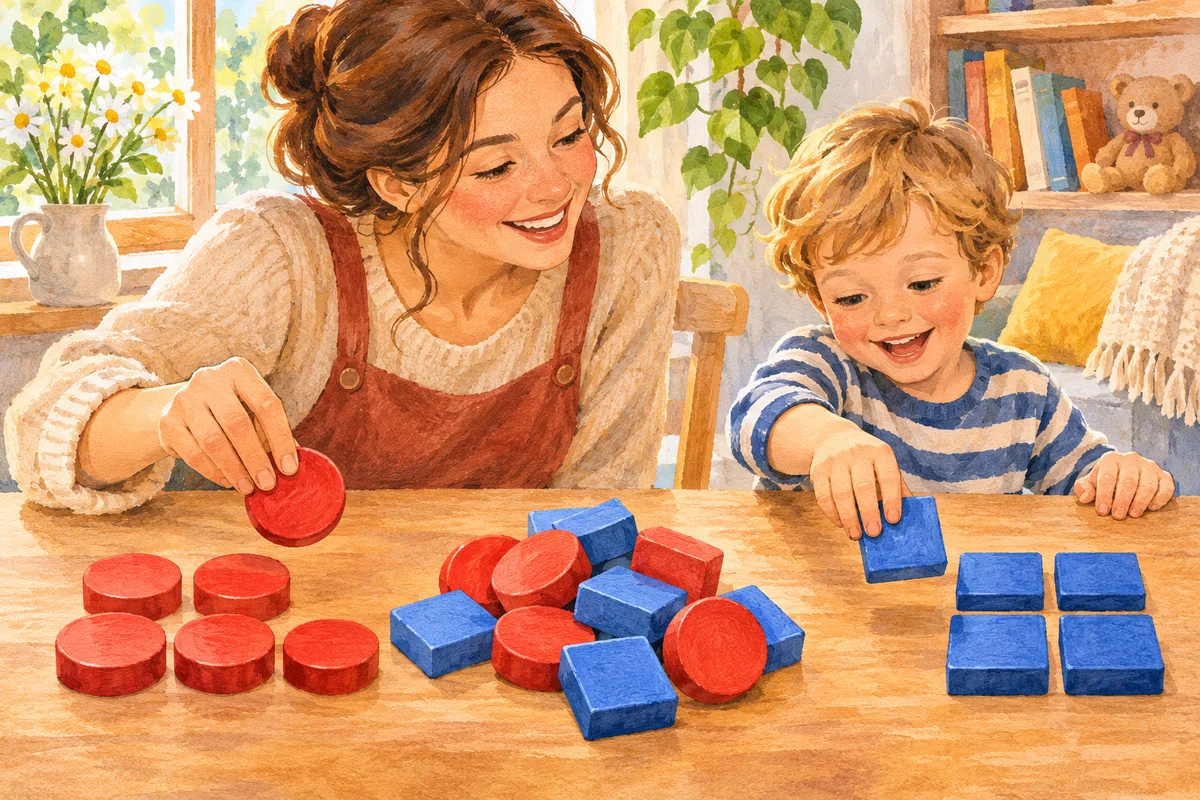
Find what is different
Put out three spoons and one cup. Ask your child to find which object is different and ask why. Later change the rule: look for a different colour, shape or size.
If your child suggests another sensible answer, listen. For example, a red block can be different because of its colour and also because it’s the smallest. Talking about the choice matters more here than guessing.
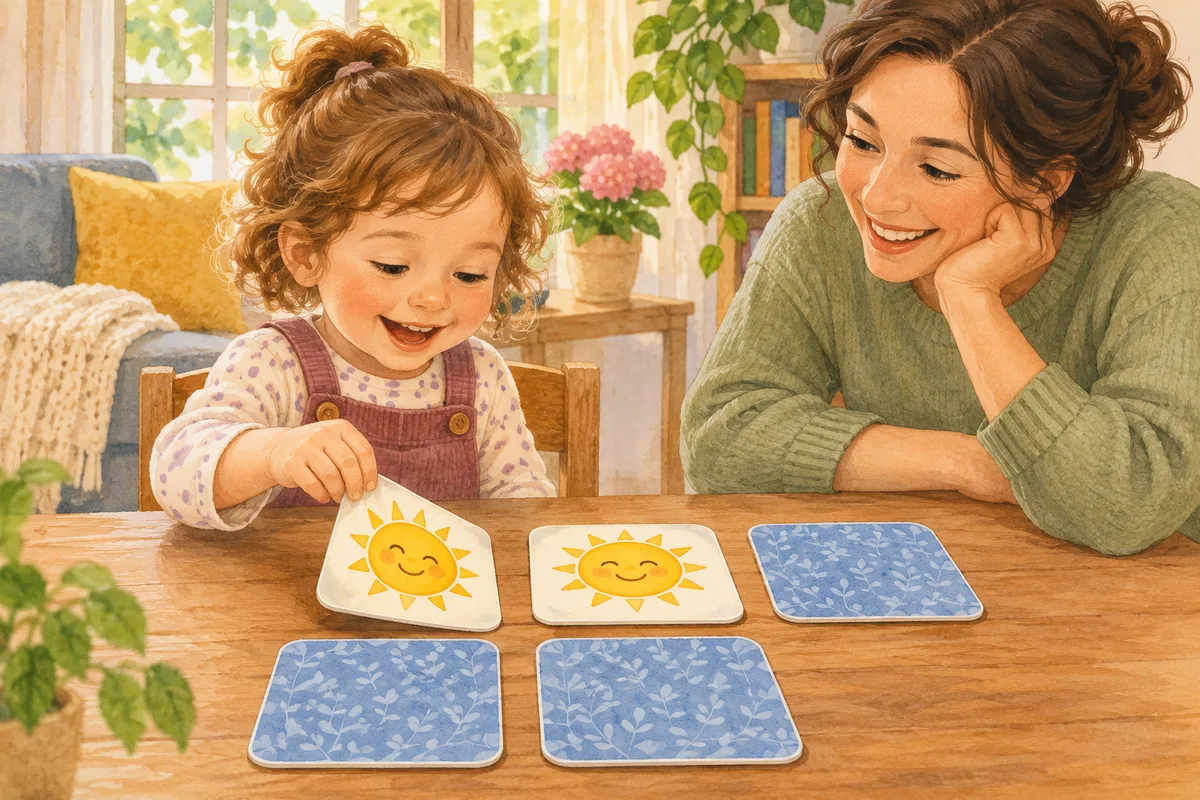
Sort and look for pairs
Lay out a few pairs of socks, mix them up and invite your child to find the matching ones. You can start with two pairs and add more later. Talk about whether colour, size or pattern helped to spot the pair.
Toys can be sorted into those that roll and those that don’t, and blocks into round and angular ones. Next time let your child make up a sorting rule for you.
Make simple patterns
Lay out a red, a blue and another red block. What colour could come next? If it’s tricky, repeat the pattern aloud and place the missing block together. You can also do it by clapping: clap, tap, clap.
Help, but don’t hurry
Start with a visible difference and a small number of choices. If an answer doesn’t work out, show an example or try again with real objects. In KUKŪ games for kids you’ll also find logic, colour and memory puzzles.
Frequently asked questions
What age can children start playing logic games?
Simple sorting can be adapted for a small child by choosing safe, familiar objects. The key is to match the difficulty of the task to your own child.
Do I always need to say an answer is wrong?
It’s better to ask how your child came up with their answer and to give a hint. Sometimes a puzzle can have more than one sensible solution.