 KUKŪ
Syllables
Syllables for Kids: Clapping Games with Words
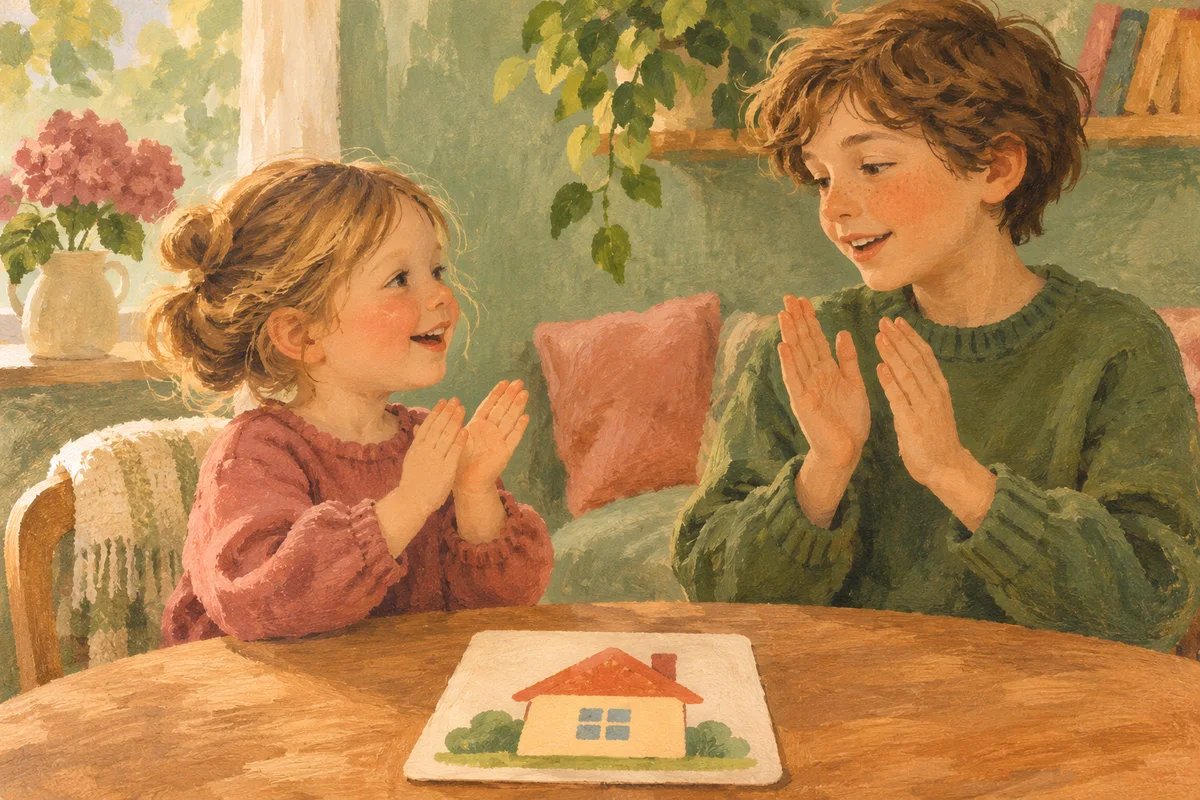
Syllables for kids are easy to show: say a familiar word slowly and clap once for each syllable. Try saying “ap-ple” and clap twice. Later your child can march, line up blocks or choose the word themselves. Two or three words your child uses every day are enough for a first game.
How to show where the syllables are
Say “apple” at normal speed. Then repeat “ap-ple” with a short pause between the parts. Clap once as you say “ap” and a second time as you say “ple”. Your child can clap along or just watch at first. Good words to follow with are “ti-ger”, “ta-ble” and “mum-my”.
Compare a word that needs one clap, such as “yes”, with a word that needs two. If your child first counts three claps, calmly say the word again, clapping at the same moment. What matters is linking the rhythm to the parts you hear. Quick clapping that isn’t tied to the spoken word can make the rule confusing.
Count syllables with blocks
Choose one picture, such as a tiger. At first, put the blocks next to you. Say “ti-ger” and move one block into a row with each part. Then show an apple and let your child try. Both words have two syllables, even though they sound and look different.
Next try “ba-na-na”. If your child lines up three blocks, compare that row with a row of two. You can mark the longer row with a separate sheet of paper. Your child can place the word pictures by the row that fits. If you don’t have picture cards, just say the words aloud or point to objects you can see in the room.
March and find your own name
If your child likes to move, choose a safe spot with enough space. Say your name in parts and take a small step with each one. Your child can follow, then try with their own name. Don’t compare whose name is better or longer, as if it were a race. Instead, look for two names that take the same number of steps.
Next time, walk towards an imaginary house: one step for each syllable. When your child chooses “tel-e-phone” themselves, you can take three steps together. If you are somewhere public, this game is easy to adapt for sitting down. Instead of steps, gently pat your knee or show fingers.
Put the word parts together and guess the object
Show three familiar objects or pictures, for example a tiger, an apple and a banana. Say “ti-ger”, with a short pause between the parts. Your child can point to the picture you mean. Then say the whole word normally and let your child try with another picture.
If the pause is too long, it can be hard to link the parts. Shorten the gaps and start with two syllables. When your child thinks of a word to split, leave time for you both to have a go. If you disagree, repeat it slowly together and listen. Later you can move on to another activity and hearing the first sound of a word.
When to show the word on paper
When you play with sounds, you are mostly listening and talking. If your child is curious how the word looks written down, write “TIGER” next to the picture. Underneath, mark “TI-GER” and clap again together. The dividing hyphen helps show the activity, while without it you see the usual spelling of the word. One word is enough.
For practice, choose clear examples rather than explaining complicated spelling rules. Later your child can pick a letter they recognise in the word, or try letter recognition in the KUKŪ alphabet games. That is a separate step. Your child can play syllable games even if they can’t read a single word yet.
Words for a quick game
When getting dressed, “jack-et” and “trou-sers” work well; at breakfast, “por-ridge” and “ba-na-na”. At playtime you can choose “dol-ly” or “trac-tor”. The word should be familiar to your child. If they want to split the name of a toy they have chosen, start with their suggestion.
For a longer round, suggest “wa-ter-mel-on” and “but-ter-fly”. The first time, you can say the word yourself while your child counts the claps, then swap. It helps to say every example at normal speed first, so your child recognises the word, and only then show its parts. After clapping, say the word again without pauses.
If your child prefers playing with toys, act out each word with one toy. Put down a doll and say “dol-ly” slowly. Push it forward one small step with each syllable. Then your child can pick a toy and decide how many steps it needs. For example, “ted-dy bear” takes three.
You can also play with words you spot out of the window. Find a bus, a bicycle or a lamp post and say what you see before you clap. One of you picks the word, the other splits the syllables. On the next turn, swap roles. That way your child can join in even on a day when they only want to point at things.
If you want to carry on, put three sheets of paper on the table. By the first, put pictures of words that need one clap, by the second two, by the third three. Start with one example for each group. Then let your child add their own and check aloud together. If a picture has several names, first work out which word you are saying, because that can change the number of claps.
Frequently asked questions
How is a syllable different from a letter?
We see a letter written down, but we hear a syllable when we say it. One syllable often has several letters. A simple example is “sun”: you see S, U and N, but when you say “sun” you clap once.
What if my child claps too many times?
Briefly show an example where the word clearly splits into two parts, and clap at the same moment as you say it. If it is still hard, just listen once and put down one block for each part you say. Ask whether your child would like to try the difference with a word they choose.
Do we need to practise syllables every day?
You can come back to it whenever the game suits the day. A single moment while looking at a book or getting ready to go out is enough. If your child is curious, let them think up a word while you try the clapping. When interest fades, leave the game for another time.